
“Content” is one of those words that makes business owners’ eyes glaze over. It sounds like something a marketing agency would bill you for. All it really means is the words on your website. Your service pages, your about page, your answers to common questions. And here’s the thing a lot of people miss. Google can’t see how good you are at your job. It can only read what your website says. If your site doesn’t explain what you do clearly, Google has nothing to rank.
What counts as content on a website?
Everything someone can read on it. For a local business, the most important bits are your service pages. One page for each job you do, explaining what it involves, where you cover and how to get in touch. After that come your home page, your about page, your reviews and any guides or answers to common questions.
Photos count too, in a way. Google reads the descriptions you give them, and customers trust real photos of your work far more than stock images. But words are what Google leans on most.
Why does content matter so much for SEO?
Because Google’s whole job is matching a search to the page that answers it best. Someone types “rewire a house in Crosby”. Google looks for a page that talks about rewiring houses and mentions Crosby. If your site just says “electrical services” on the home page, you’re asking Google to guess. It usually picks someone who spelled it out.
Content also does the selling once people arrive. A clear page that answers their questions makes them far more likely to ring you. Good content does two jobs at once. It gets you found and it gets you picked. That’s why it’s such a big part of what I do every week.
It matters for AI search too. When ChatGPT or Google’s AI answers recommend a local business, they lean on websites that explain clearly what the business does and where. I’ve written more about that in AI SEO: what you need to know.
What does good website content look like?
It sounds like you explaining the job to a customer. Plain English, no jargon and no padding. It answers the questions people actually ask you on the phone. How much does it roughly cost? How long does it take? Will it make a mess? Do you cover my area?
It’s specific. “We offer a high quality service” tells nobody anything. “We fit most new consumer units in a day, and we’ll test every circuit before we leave” does. Specifics are what make a page useful to a customer and easy for Google to understand. They’re also what make your page different from every other one in your trade.
And it’s aimed at the searches that bring in work. There’s no point writing a beautiful page about something nobody searches for. I explain how to pick those searches in how to choose the right SEO keywords.
What’s wrong with thin or copied content?
Thin content is a page with hardly anything on it. A heading, two lines and a phone number. Google doesn’t have enough to work with, so it rarely ranks. Customers don’t get their questions answered either, so they leave.
Copied content is worse. I see a lot of sites where the same page has been cloned twenty times with the town name swapped. “Plumber in Bootle”, “Plumber in Litherland”, “Plumber in Netherton”, all word for word the same. Google spots that easily and tends to ignore most of them. Text lifted from a supplier’s website or a competitor has the same problem. If you want area pages, each one needs to say something real about that area.
How much content does a local business website need?
Enough to clearly explain each job you want more of. There’s no magic word count. A simple service might need a few hundred words. A bigger job with lots of questions around it might need much more. The test is whether a customer reading it would have what they need to pick up the phone.
Start with your money pages. The three or four services that bring in most of your work should have their own strong pages before you write anything else. Then add the next most important ones over time. Steady additions every month work better than writing everything in one go and leaving it for three years.
Does a local business need a blog?
Not always. If your service pages are thin, sort those first. A blog won’t make up for weak service pages. But once they’re in good shape, helpful guides can bring in people at the stage where they’re still working out what they need.
The best blog posts answer questions your customers already ask you. Why does my boiler keep losing pressure? Do I need planning permission for a fence? How often should I get my carpets cleaned? Each one shows you know your stuff, and each one can link through to the service page that solves the problem. What I wouldn’t do is post news about your Christmas party. Nobody’s searching for that.
Can you use AI to write your website content?
You can use it to help, but I wouldn’t let it do the whole job. AI tools write very general text that sounds like everybody else’s. It doesn’t know your prices, your area, how you work or the questions your customers ask. That’s exactly the stuff that makes a page useful.
When I write pages for clients, I ask them for the bits only they know, then write it so it sounds like them. You can see how it’s working in your live reporting portal, which shows which pages are being found and which ones bring in enquiries. If your whole site needs redoing, my content overhaul service is built for that.
Is your website saying enough?
Send me your website and I’ll read it the way Google and your customers do. I’ll tell you which pages are missing or too thin, and which ones I’d write first.
If you want me to crack on, it’s £125 a week, about £18 a day, on a 30 day rolling basis.
Free website check
Checked by me, not a tool.
Rather message? WhatsApp 07463 631121 or call 0151 402 0925.
Questions people ask me
What is content in SEO?
The words on your website. Service pages, your about page, guides and answers to common questions.
Does content really affect rankings?
Yes. Google can only rank you for what your pages actually say.
How long should a service page be?
Long enough to answer what customers ask about that job. There’s no magic word count.
Can I copy text from my supplier’s website?
I wouldn’t. Google tends to ignore copied text, and it doesn’t sound like you.
Do I need a blog?
Not until your service pages are strong. After that, helpful guides can bring in extra visitors.
Is AI-written content OK?
It can help with a first draft, but it doesn’t know your business. The details have to come from you.
How often should I add new content?
Steadily. A new or improved page each month beats a big burst once every few years.
Do you write the content?
Yes. I ask you for the bits only you know, then write it so it sounds like you.
Keep reading
Content is one part of the bigger picture, and on-page SEO basics for small businesses covers the rest of what’s on your site. If you want people to actually get in touch once they’ve read it, how to turn website visitors into enquiries is the next step. And if you’re in the middle of a new site, read my website redesign SEO checklist before you change any pages.
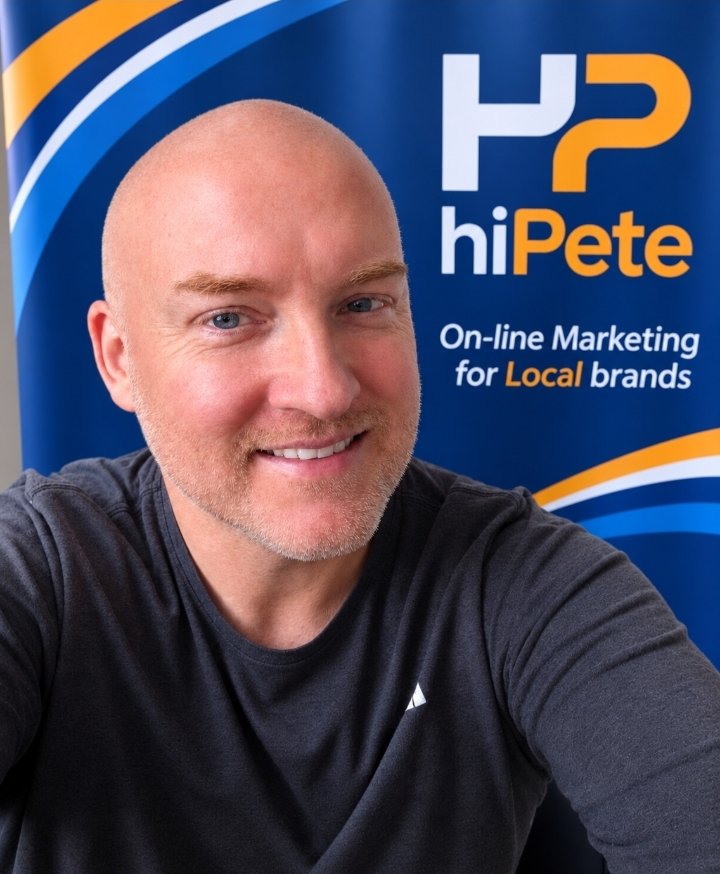 Hi, I’m Pete
Not sure what your website should say?
Send me the link. I’ll tell you which pages I’d write or rewrite first, and why.
WhatsApp meContent overhaul